

Engineer Your Summer
Study Abroad in Heidelberg, Germany
Elevate your degree.Expand your world.
Based at CEPA’s European Study Center (ESC), this innovative 6 1/2 -week summer program offers core STEM courses, engaging electives, and distinctive access to field visits in the automobile industry, giving students the opportunity to earn credit toward their major while experiencing a summer in one of Europe’s most charming and inspirational university cities.
“Made in Germany”
Europe’s engineering hub
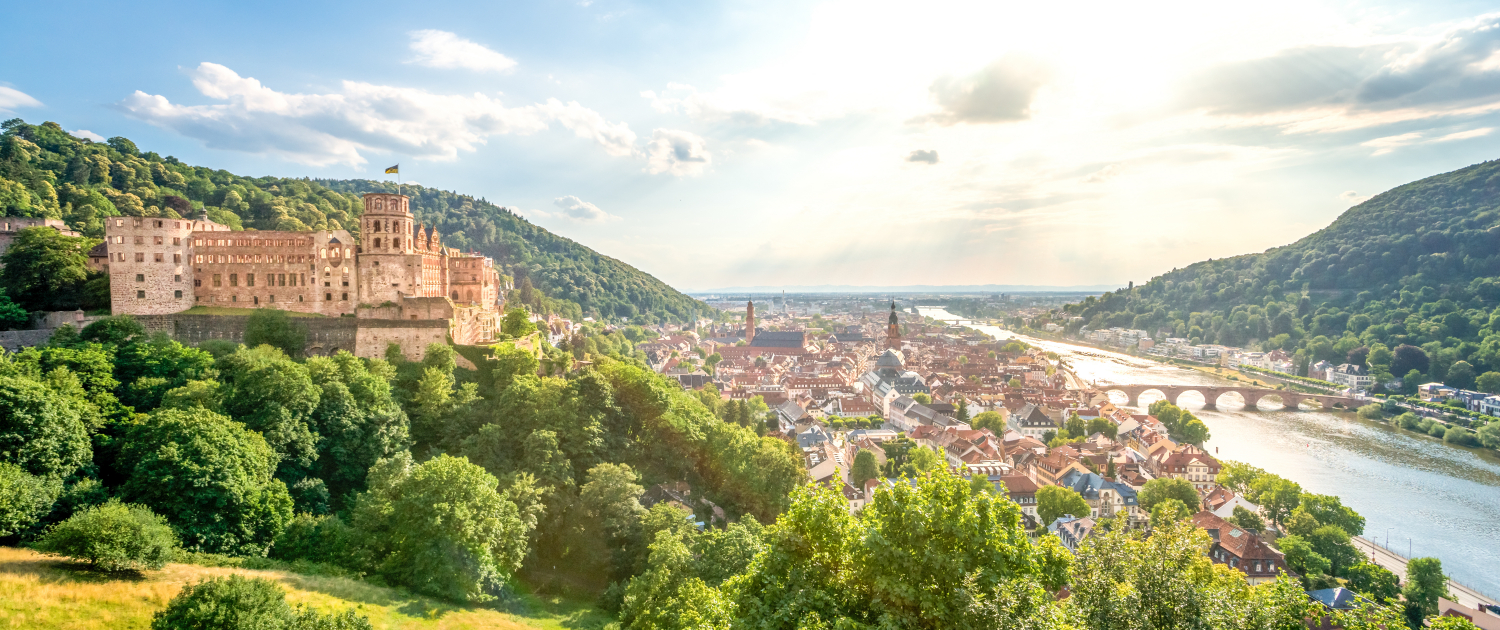
Located at the intersection of Germany’s historic academic and cultural tradition and proud of its cutting-edge industrial future, Heidelberg and the surrounding region offers engineering students a top-tier environment for studying abroad.
Academic field visits:
Heidelberg isn’t just where you study—it’s where you connect.
Engage with industry experts through integrated guest lectures, and step inside world-renowned research institutes and manufacturing giants to experience the pinnacle of German innovation up close.program leverages Heidelberg’s proximity to international corporations and talent across the IT, automotive, and advanced manufacturing sectors.
- Industry Insights: Learn directly from the source with guest lectures from field experts.
- First-Hand Experience: Get a front row seat to world-class German product quality and innovation.
Heidelberg
Picturesque historic city with a modern student vibe
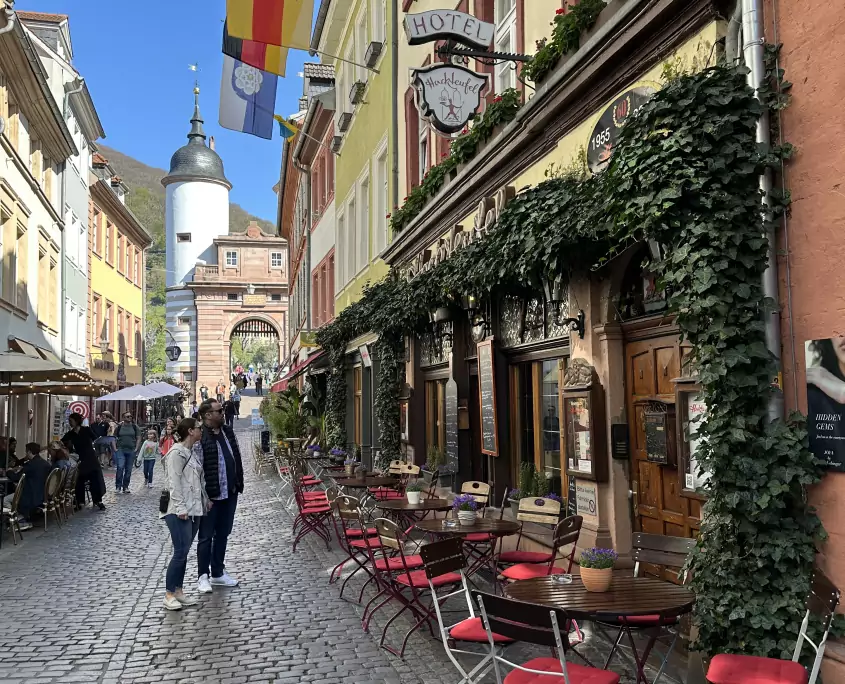
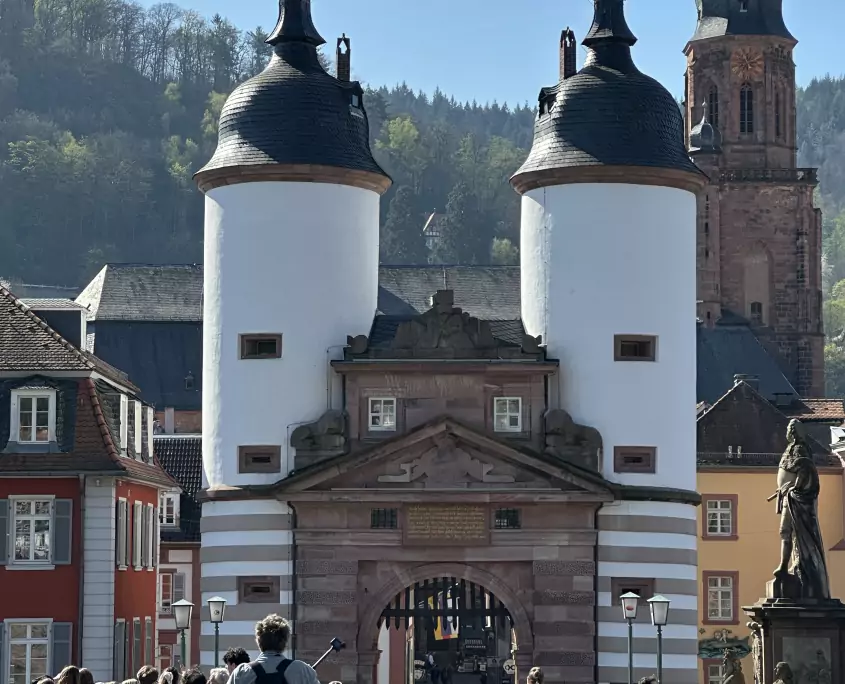
Heidelberg is an inspiring, student-centered medieval city with a vibrant social scene, nestled in a flat valley along the Neckar River, making it easy and affordable to bike or walk anywhere. Thanks to its global reputation, about 25% of its population are students living in a multicultural and welcoming setting.
Co-curricular activities:
Discover Heidelberg and experience German culture through enriching, hands-on activities outside the classroom! Join a guided city tour, museum visits, food tastings, group hikes, recreational sports, and other events to learn more about what makes Heidelberg so special.
Excursions
Beyond the Classroom
Passport Ready? Pack a Bag for France!
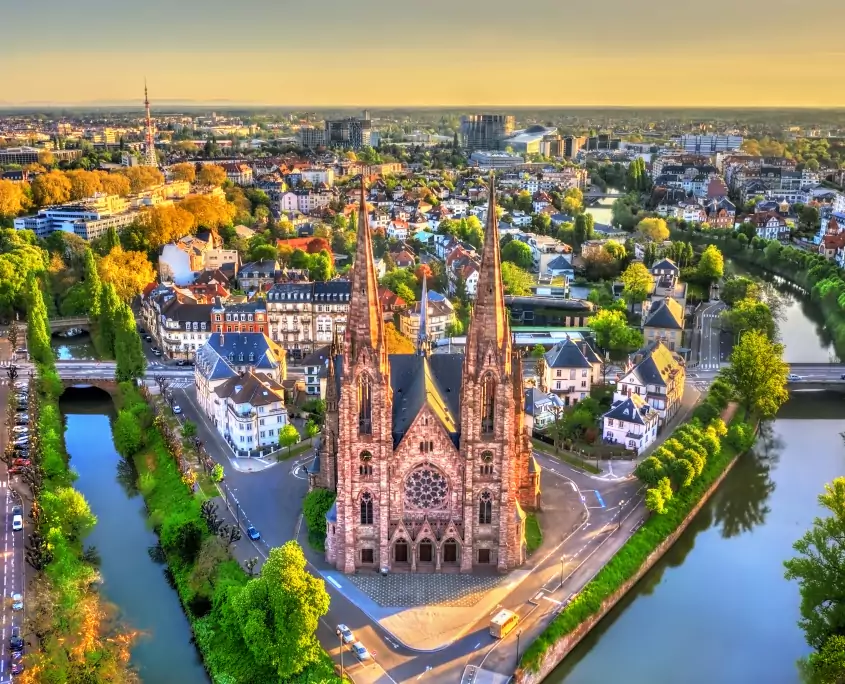
An exciting overnight excursion to Strasbourg, France is included in your program.
Take full advantage of being only a couple of hours from France to spend 2 days in Strasbourg, the capital of the Alsace region and one of Europe’s most historically and politically significant cities. Learn about the city’s UNESCO World Heritage-listed historical center, including the picturesque Petite France district and the iconic Strasbourg Cathedral, one of Europe’s finest examples of Gothic architecture.
Visit the European Quarter, where you will gain insight into the role of key European institutions. Discover authentic French cuisine at the local restaurant that welcomes your group. In your free time, explore the city’s cultural and social scene, and fully immerse yourself in European history, identity, and cross-border culture.
Two full-day excursions within the Rhein-Neckar Region and Southern Germany
Two full-day excursions are designed to connect classroom learning with local culture through guided historical and technical tours.
Travel to German cities such as Stuttgart, Wiesbaden, or Neckarsulm with your group and experience activities such as:
- Visit an automotive manufacturing plant that has been producing vehicles for over a century and is still manufacturing its high-end sedans and the fully electric e-tron GT.
- A technical tour of a historical salt mine – an immersive masterclass in geotechnical engineering, heavy machinery design, industrial thermodynamics, and automation.
- Experience authentic Swabian and German cuisine at local restaurants.
- Enjoy some free-time to explore.
The ultimate launchpad to
Explore Europe
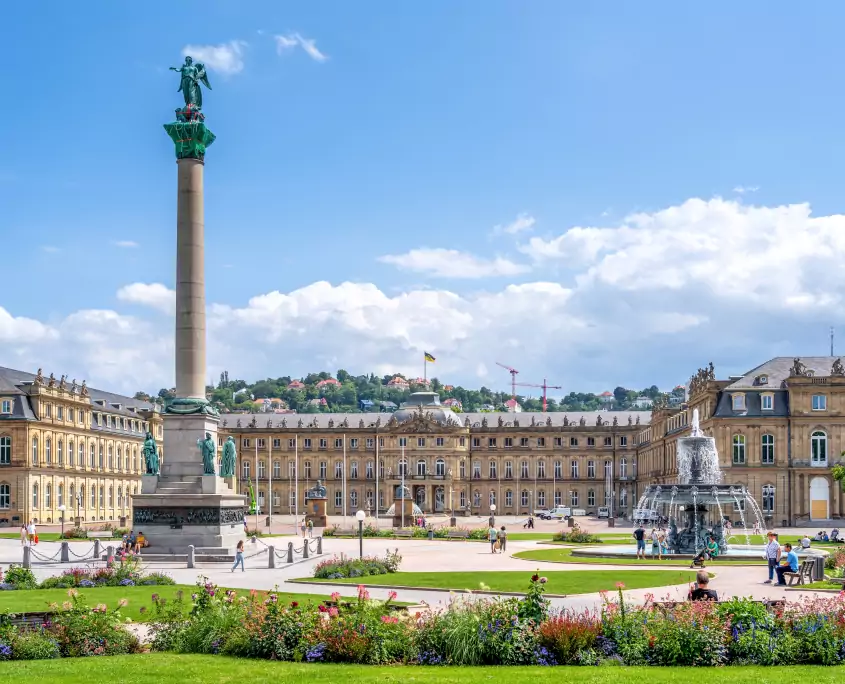
Beyond the fairytale castle and old-world charm, Heidelberg’s real secret power is its geography. Centrally located in the heart of Europe, it makes the perfect base for free-time travel to discover southwestern Germany, eastern France, and the surrounding natural landscapes.
- Take advantage of the Deutschland-Ticket that is included in your program. This pass covers unlimited local transit and regional trains nationwide.
- Heidelberg is highly connected by Germany’s excellent train network (DB – Deutsche Bahn). You can easily take a train straight to Stuttgart, Munich, Paris, or the Swiss Alps.
- Frankfurt International Airport (FRA), a massive global transit hub offering budget-friendly flights to nearly every major city in Europe, is a one-hour train ride away.
Eligibility
- Be at least 18 years old and a high school graduate
- Minimum 2.5 GPA or higher
- Completed required prerequisites for selected courses
What’s Included
- Courses and credits
Transcripts from the ESC School of Record, the University of Connecticut - Student housing
- Orientation sessions
- On-site staff based at the center
- Welcome & farewell meals
- Accommodation, round-trip transportation, activities, and some meals are included for excursions
- Deutschland-Ticket
- Group airport transfer on arrival day
- Health & Safety
- 24/7 emergency phone access
- CEPA App
Optional international medical insurance can be booked for an additional fee.
- Introduction to German language workshop
- Academic field visits
- Co-curricular program of activities
- Excursions
- Two day excursions within Germany
- One international overnight excursion in France
Dates & Fees
Program fee:
$ 7,995
Upon acceptance into the program, a non-refundable $500 deposit is required. This deposit will be applied toward your total program fee.
Fee does not include:
- Airfare
- International travel and health insurance
- Passport, visa or entry documents if required (speak with your study abroad advisor)
- Meals, except for those listed
- Personal expenses
Academic Program
Courses are designed to fit seamlessly into US curricular requirements.
Best-fit candidates:
- All students are welcome to apply.
- This program is a great fit for students from a variety of study fields, including math, sciences, and engineering majors.
- Students who have completed one year of study
- Accomplished scholars in their field and fluent in English
- English
- Earn 6 – 7 US Semester Credits
- The University of Connecticut is ABET accredited and will provide the transcripts for this program.
Course Offerings
Two courses are included in the program.
Students can earn up to 7 US semester credits.
Students enroll in:
Differential Equations – MATH 200 (4 credits)
Course Introduction:
Germany has played a central role in the development of mathematics, physics, and engineering. Among its most influential mathematicians is Gottfried Wilhelm Leibniz. Born in Leipzig in 1646, Leibniz made foundational contributions to calculus and is also credited with helping establish the field of differential equations. He introduced the term aequatio differentialis, Latin for “differential equation,” reflecting the emerging mathematical language used to describe changing quantities.
In this course you will cover material related principally to differential equations dealing with ordinary differential equations. Differential Equations are an important tool in Science and Engineering and are commonly associated with understanding population dynamics, radioactive decay, and certain chemical reactions.
The content of this course will thus focus on first-order differential equations, higher-order differential equations, Laplace transforms, series solutions of linear differential equations, and the theory of linear systems. In addition to the cognitive and knowledge skills listed above, students in this course will consider the contributions of Germans in science, mathematics, technology, and engineering through experiential learning components.
Syllabus:
Multivariable Calculus (Calc III) – MATH 200 (4 credits)
Course Introduction:
Germany has played a central role in the development of mathematics, physics, and engineering. Among the most influential figures is Gottfried Wilhelm Leibniz, who is widely credited as a co-inventor of calculus. Born in Leipzig in 1646, Leibniz introduced many of the concepts and notations still used today, including the notation for integration and differentiation. His work laid the foundation for modern calculus and continues to shape the mathematical tools we study in this course.
In this course you will cover material related principally to Multivariable Calculus, also known as Calculus III. Multivariable calculus is the fundamental to Science and Engineering. This course will extend the concepts learned in Calculus I and II.
The content of this course will thus focus on curves and surfaces in Euclidean 3-space, length and curvature, area and volume; surfaces, partial derivatives, total differential, tangent planes to surfaces; gradient; vector-valued functions; line integral; Stokes’ theorem, Green’s Theorem, and the Divergence Theorem.
In addition to the cognitive and knowledge skills listed above, students in this course will consider the contributions of the Germans in science, mathematics, technology, and engineering through experiential learning components.
Syllabus:
Fundamentals of Thermodynamics ENG 200 (3 credits)
Course Introduction:
From Rudolf Clausius to Max Planck, German researchers helped transform thermodynamics into the subject studied today.
In this course you will cover material related principally to classical thermodynamics and their applications. The content of this course will thus focus on thermodynamics terminology, evaluating properties of pure substances, conservation of mass and energy, the Carnot Cycle, the First Law of Thermodynamics, the Second Law of Thermodynamics, entropy, reversibility, and applications of thermodynamics in engineering systems.
In addition to the cognitive and knowledge skills listed above, students in this course will consider the contributions of Germans in science, mathematics, technology, and engineering through experiential learning components.
Syllabus:
The History, Culture, and Science of Beer and Brewing – INTD 300/ENGR 300 (3 credits)
Course Introduction:
This course bridges the gap between historical tradition and industrial logic, exploring how engineering milestones—from medieval thermodynamics to modern biotechnology—have shaped the world’s most iconic beer styles. Through a blend of immersive history, light engineering principles, and integrated sensory labs, students will analyze the chemistry of raw materials and the physics of fermentation.
Designed for both engineers and curious scholars, this experiential course transforms the study of producing beer into a case study of innovation, sustainability, and German heritage.
Syllabus:
CEPA ESC Heidelberg History Culture Science of Beer and Brewing
ESC Heidelberg:
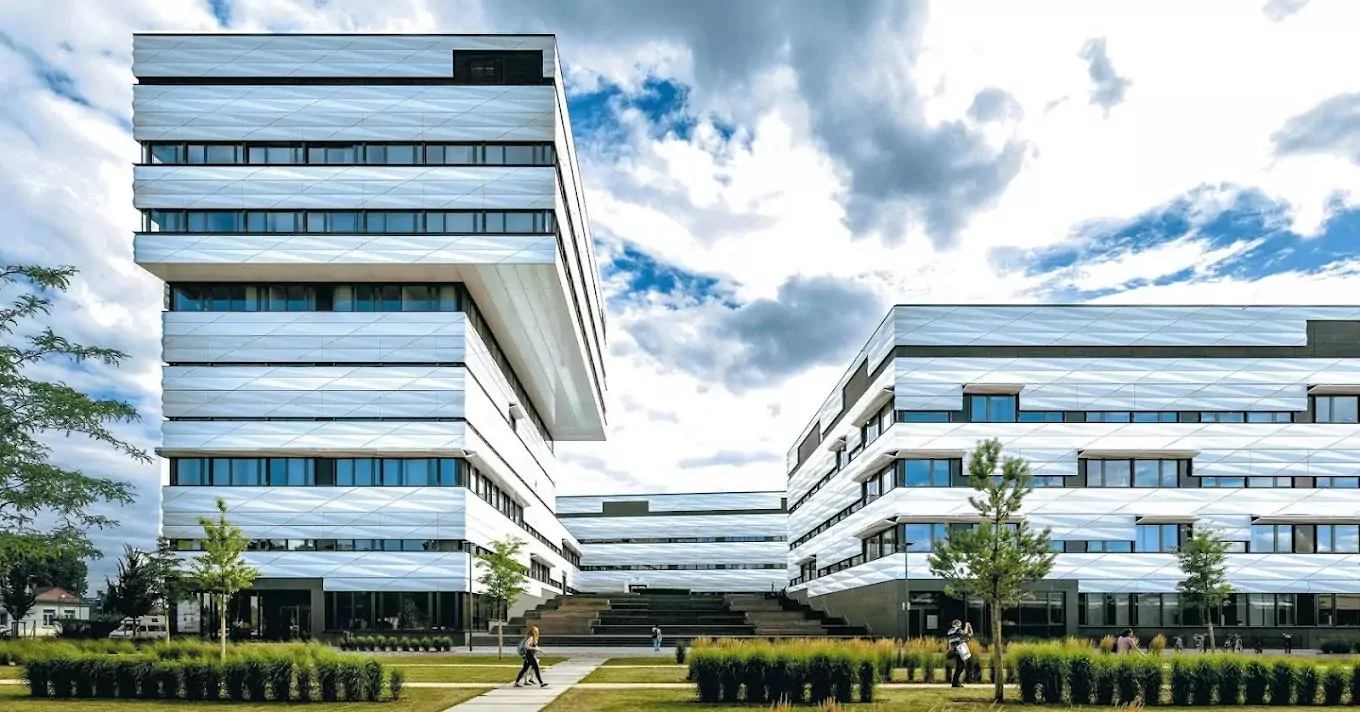
The ESC Heidelberg is housed at Schiller International University and has a long-standing partnership with their Heidelberg campus.
The ESC offers everything you need to succeed academically and personally in a supportive, international environment:
Facilities:
- Modern and friendly campus
- Access to library and student lounge
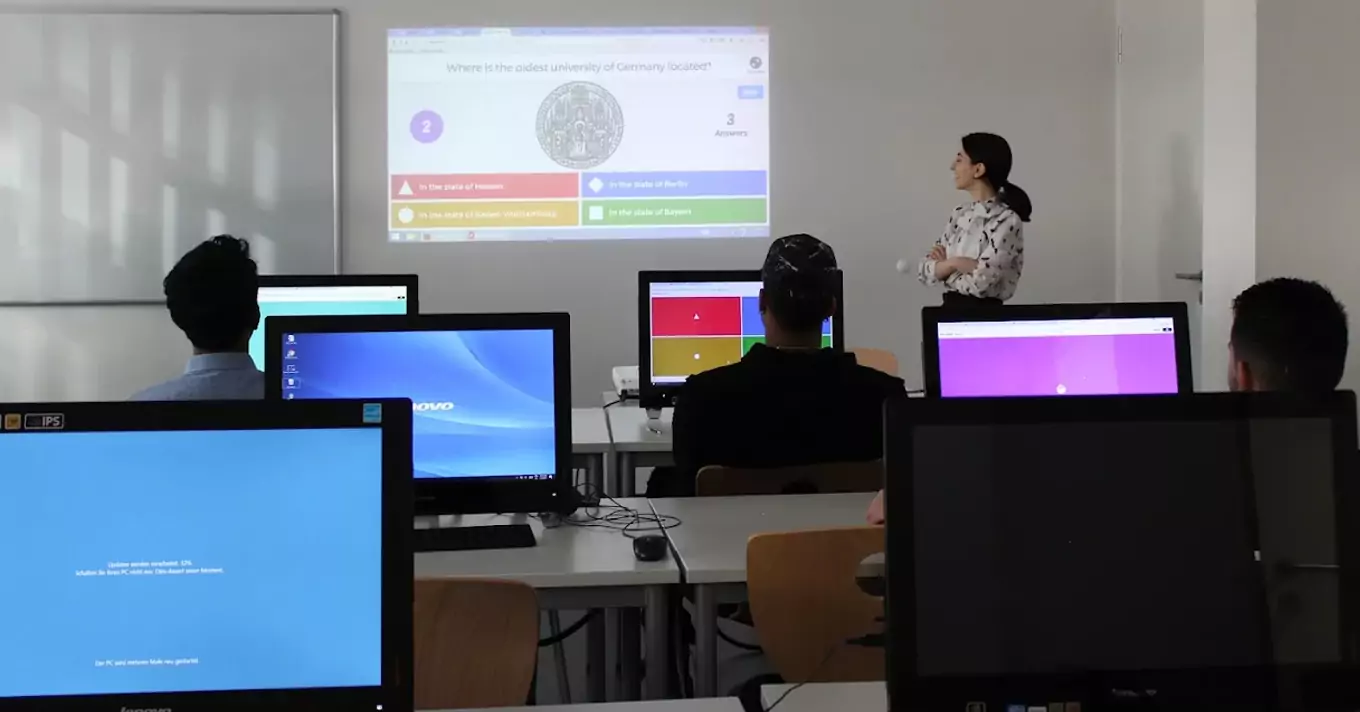
- Interactive whiteboards and climate controlled classrooms
- Cozy student lounge and study spaces
- Outdoor green areas
Location:
It is just a 10 minute walk from student housing to the classroom facility.
Student Housing
The cohort experience:
Live in studio apartment residences with fellow students and locals
Rooming:
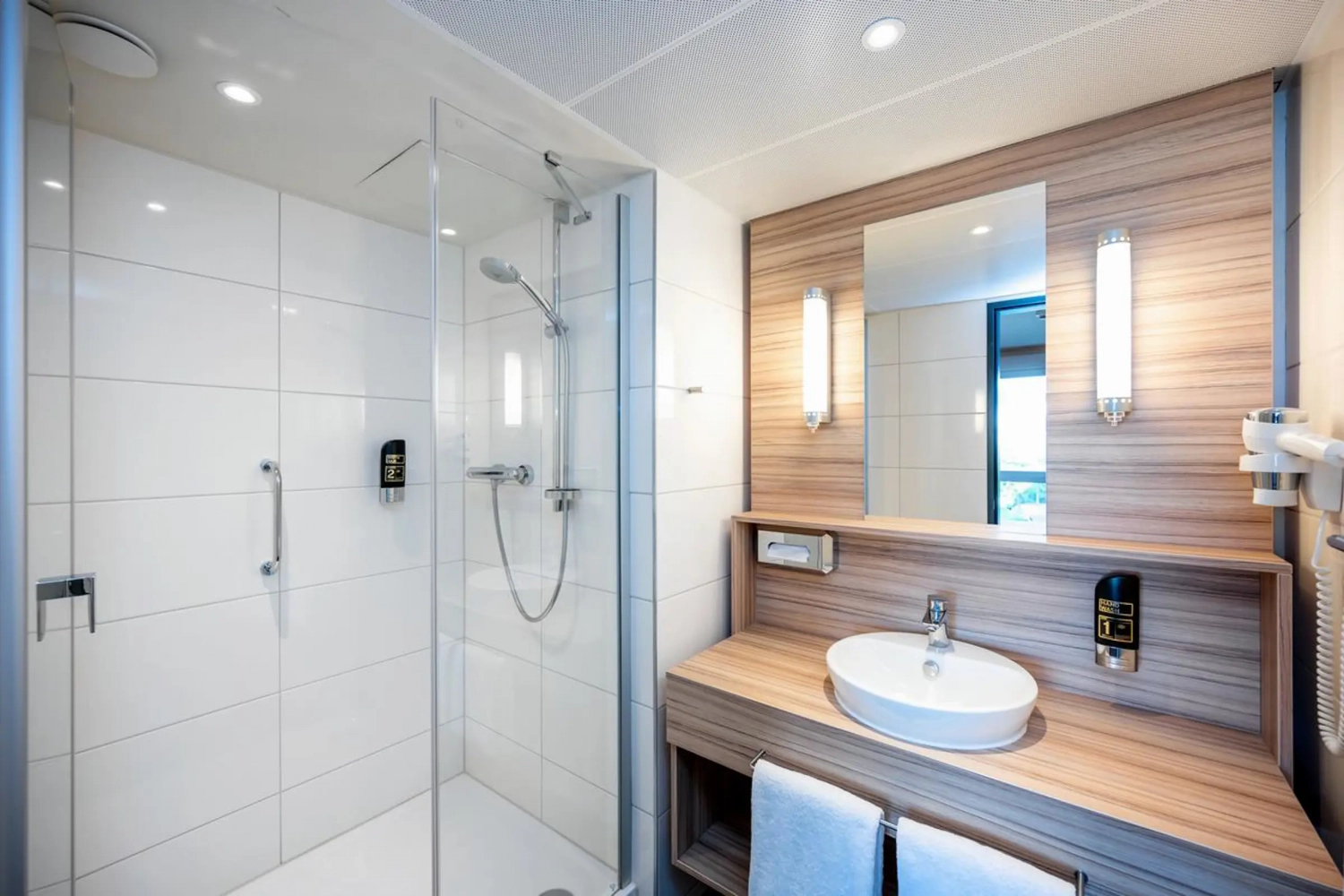
Double occupancy with ensuite bathroom and kitchenettes
Amenities:
- Offers a lounge and central courtyard
- Common work area with free WIFI connectivity
- On-site laundry facilities (at own cost)
Location:
- Centrally located near public transportation
- A 10-minute walk to/from ESC Study Center and the Heidelberg Hauptbahnhof (main train station)
- 5-minute walk to/from bus and tram stops

Scholarships
At CEPA, we believe life-changing experiences should be accessible to everyone. By providing scholarships and grants, we invest in future leaders who will, in turn, strengthen and give back to their communities.
- Students from a CEPA Affiliate institution will automatically receive a grant. (Reach out to your study abroad advisor to see if your institution is an affiliate.)
- Merit and need-based scholarships are available to students who qualify and must apply.
- 5 x $500 scholarships and 5 x $1,000 scholarships are available for students participating in the inaugural summer 2027 program
Sustainability@CEPA
Global education should protect the very world it seeks to explore.
Your participation in this program is part of a greater nature-positive legacy at CEPA. To ensure your journey leaves a positive mark on both the environment and communities, we do the following on your behalf:
- Carbon Offsetting: We purchase UN-certified climate projects to offset the environmental footprint of your on-site program.
- Growing a Legacy: We plant one native tree on your behalf in the Osa Peninsula of Costa Rica. This helps restore one of the most biodiverse places on Earth and provides jobs in the local community.
Our Location in Europe
Ready to Engineer Your Future?
Spaces are limited to maintain small class sizes.
Have questions?
Connect with an ESC advisor or join our upcoming virtual info session.
Apply early to save your place in the program