
Behind the Program: Conversation with a Milan Native
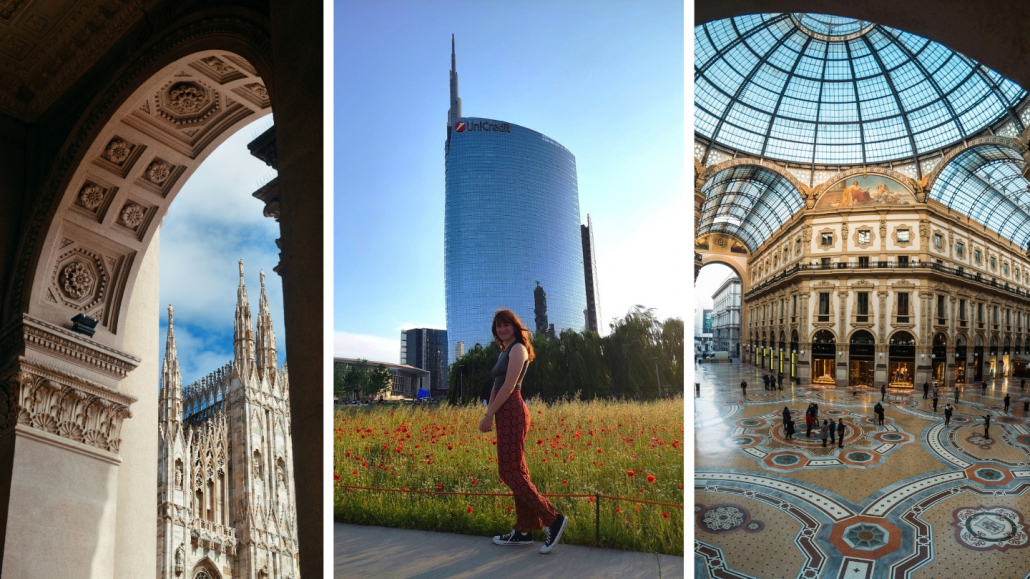 © CEPA / Terra Education
July 28, 2026
In a featured interview with CEPA’s Program Manager and Milan native Eleonora Ubaldi, we go behind the scenes of creating an unforgettable design study abroad experience to discover the bridge between the participants and Italian culture.
Eleonora moved from Milan to Germany after graduating in Cultural Mediation, seeking to turn her academic background into real-world experience by living and working in an international setting. She joined the CEPA team in January 2025 and has been working as a Program Manager since January 2026.
What she enjoys most about working at CEPA is being able to combine her passion for culture with the creative and organizational aspects of program planning and putting together experiences that help students discover new places and see them from a different perspective.
One of the most interesting parts of her role is learning about each destination while building programs around its history, culture, and unique character. Even when working remotely from home in Milan, she often finds new details and stories that make familiar places feel new again.
Question: Briefly describe what the study abroad program was about, and the process and expert knowledge you used to develop the itinerary for the faculty leader and their students.
The study abroad program immersed students in Milan’s renowned creative culture through visits to industry-leading studios, showrooms, and organizations. It connected classroom learning with real-world practice, allowing participants to engage with professionals, explore innovative spaces, and gain insight into international trends.
The faculty leader had already developed a strong itinerary and clear vision for the program, so my role focused on refining the logistics and bringing that vision to life.
I utilized my expertise in study abroad program planning, destination logistics, and industry networking to coordinate site visits, assess scheduling feasibility, and ensure the itinerary flowed efficiently.

Question: What was the most challenging “puzzle piece” to fit into this itinerary, and how did you solve it?
Probably, it was making adjustments to the travel dates for the Switzerland portion of the program. Through proactive communication and flexibility, I was able to preserve the program’s core academic goals and ensure that the students were still able to have the requested professional experiences.
Question: As a Milan native, what is one “hidden gem” or local tip you included in the itinerary or told them about that isn’t in any of the standard guidebooks, websites, or something only a local would know?
One of my favorite places is the courtyard of the Università degli Studi di Milano. Most tourists walk right past it without realizing what they’re missing, but it’s one of the most beautiful and peaceful spots in the city.
I also always tell them not to rush from one famous landmark to another. Milan reveals itself in its courtyards, small galleries, and neighborhood cafés. If you slow down and look beyond the main streets, that’s where you really discover the city’s personality.
Question: How does it feel to show off your hometown through the lens of your professional work? Has this program changed how you view Milan?
It’s something I’m really proud of. Growing up in Milan, I took a lot of things for granted because they were just part of everyday life. Organizing this program has given me a much deeper understanding of the city’s design culture.
Through researching studios, exhibitions, and creative spaces, I’ve learned so much about design and discovered parts of Milan I hadn’t fully appreciated before. It’s made me see my hometown in a completely new way and appreciate just how much design is part of its identity.
Question: North American college and university students and Milanese designers represent two very different cultures. What has been the most interesting “clash” or beautiful connection you witnessed between them?
I think the biggest difference was the approach to communication. American students are usually very comfortable asking questions and sharing ideas straight away, while Italian designers can be a bit more reserved at first.
But once they start talking about creativity and the design process, those differences disappear. It’s always inspiring to see them connect over a shared passion, even if they come from completely different backgrounds.
Question: What is one major misconception you think American students have about Italy and Italian design before they arrive, and how does this study abroad program shatter it?
Many students arrive thinking Italian design is only about luxury fashion and iconic furniture brands. While those are definitely part of it, they quickly realize that design here is much broader.
It’s about problem-solving, craftsmanship, sustainability, urban planning, food, and even the way public spaces are designed. Milan shows them that design isn’t just something beautiful to look at—it’s something that shapes everyday life.
Question: If you could bottle up one specific moment from this program when you saw or heard about a student’s perspective shift, what would it be?
One moment that stands out to me is seeing how curious students became about everyday Italian culture. During the program, they asked so many questions about food, local traditions, and the Italian way of life.
Things that feel normal to us—like where to get the best espresso, how to choose a restaurant, or the rituals around meals—were completely new and exciting to them.
It was amazing to see them realize that Italian culture is not just about famous places or design, but also about the small everyday details that make Milan unique.
Question: Is there a particular design studio, museum, neighborhood, or other design-focused visit that you included in the itinerary where you find the students are always most inspired?
The Triennale is always a highlight because it gives students such a broad perspective on contemporary design, architecture, and innovation. But surprisingly, one of the places that often has the biggest impact is simply walking through the Brera district. Design isn’t just something you find in museums or galleries—it’s part of everyday life in Milan.
You can see it in the way buildings are designed, in shop windows, in public spaces, and even in the small details people often overlook. That’s what makes Milan special: design is not separate from daily life, it’s part of the city’s identity.
Question: Between aperitivo culture, navigating the Metro, and understanding Italian espresso etiquette, what “non-design” skill are you most proud of helping the students experience?
Definitely learning how to slow down and enjoy everyday moments. Whether it’s having an espresso at the counter instead of rushing off with a takeaway coffee or spending an hour enjoying aperitivo with friends, they start to understand that in Italy, everyday rituals matter.
It’s a small cultural shift, but I think it’s one they remember long after they leave Milan.
Question: For students or young professionals reading this interview who dream of studying or working in design in Milan, what is your number one piece of advice?
Milan offers incredible opportunities, but the city rewards people who are proactive. Go to exhibitions, attend design events, introduce yourself to people, and say yes to new experiences.
Also, learning at least a little Italian makes a huge difference. Even though many people in the design world speak English, showing an interest in the language and culture opens so many more doors.
Question: Tell us about the next custom group program you are working on which will be based in Milan or Italy?
One of the next programs I am organizing is in Florence for a group of university art students. It is the kind of program that reminds me why I love this job. Instead of learning about the Renaissance in a classroom, the students will be surrounded by it: walking through the streets where artists like Michelangelo and Leonardo once lived and worked, visiting museums and galleries, and experiencing the city’s incredible artistic heritage firsthand.
Would you like to connect with Eleonora about a program in Milan for your students?
Behind every great program is a great team.
Get in touch to see how we can work together.
We’d love to chat with you.
Note: Some answers have been edited and reordered for clarity.



 © CEPA / Terra Education. Used with permission. Credit: Djalel Benachi
 © CEPA / Terra Education